Mostrando entradas con la etiqueta buttermilk. Mostrar todas las entradas

domingo, 14 de octubre de 2012

Pan de yogur

En una tarde de frenesí panadero, mi amiga P. y yo horneamos las cuatro hermosas hogazas que podéis ver en la foto. Dos Waterford soda bread , como los que ya hemos publicado en este blog, y otros dos panes de yogur con los siguientes ingredientes:

Pan de yogur (para dos hogazas)
540 gr. harina de trigo
50 gr. salvado de trigo
125 gr. yogur natural
300 gr. leche
1 huevo
10 gr. mantequilla
10 gr. azúcar
5 gr. sal
16 gr. levadura fresca

La técnica de este pan de yogur es como la de otro panes de molde: mezclar por un lado los ingredientes secos y añadir la mantequilla, deshaciéndola y mezclándola con los dedos hasta que se obtiene una mezcla de textura harinosa. Posteriormente, se añaden los ingredientes húmedos y ya se puede amasar. Es una masa un poco rebelde al principio, pero en unos minutos te haces con ella. La primera fermentación fue de hora y media y la segunda, después de un formado bien tenso, de otros 90 minutos. Estuvo en el horno a 200º una hora. Tanto a P. y a mí nos pareció un pan un poco corto de sabor. Para la próxima ocasión, un poco más de mantequilla y poco más de sal creo que ayudarán a potenciarlo.

La mantequilla que utilizamos, por cierto, salió de la que obtuvimos de preparar nuestro propio suero de leche (buttermilk) para el soda bread, como se explica en la entrada que ya he citado. Es muy emocionante preparar tu propia mantequilla, al mismo tiempo que muy sencillo, toda una experiencia.

domingo, 2 de septiembre de 2012

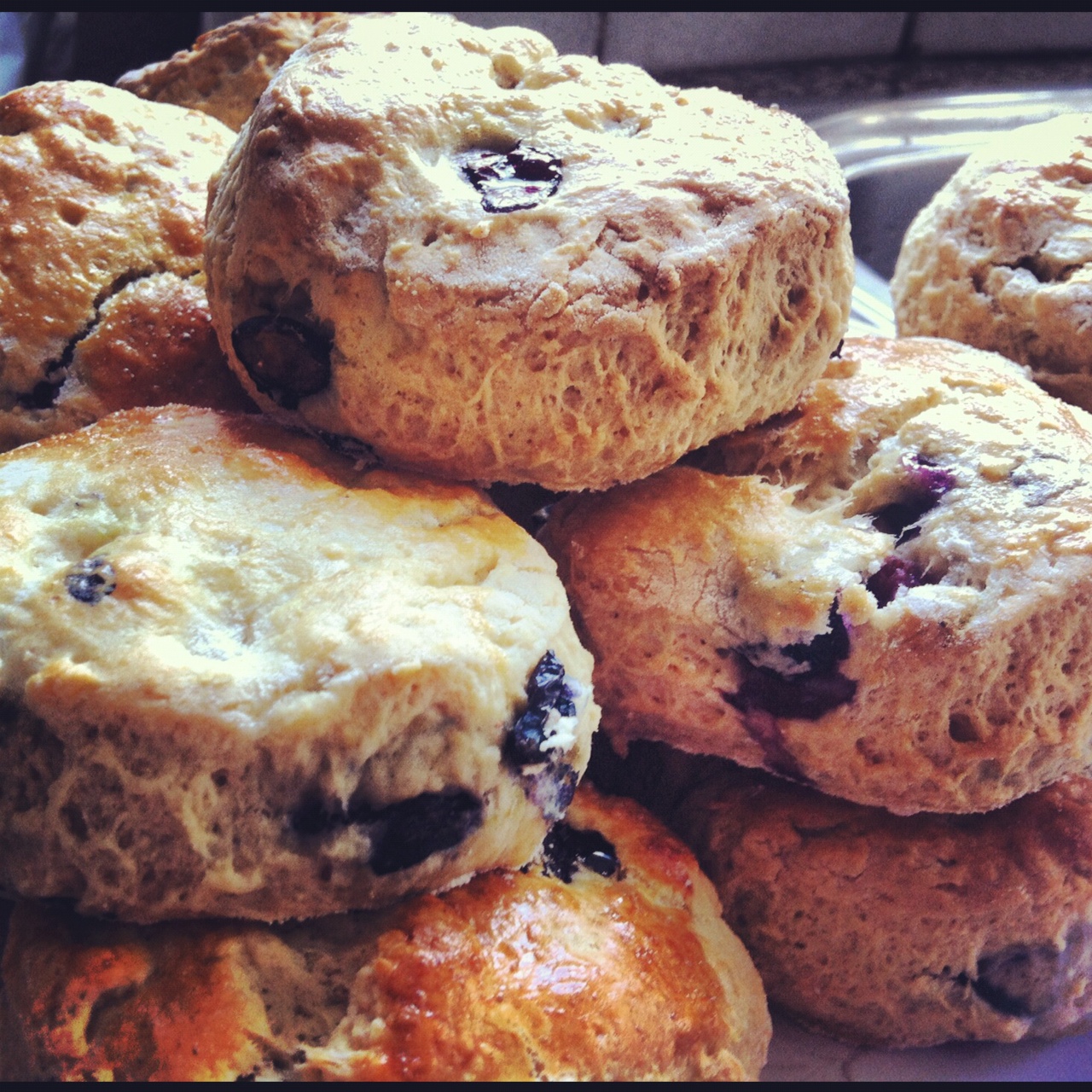
maple syrup and blueberry buttermilk scones

If you read my last post yesterday, I made not only the loaf but home made dill and gomasio butter. And as you probably know, when making butter cream you get buttermilk too.

So I decided to use the buttermilk to make always tasty scones. this time, with maple syrup and fresh bluberries. Here is the recipe:

- 500g of self rising white flour
- 50g caster sugar
- 160g slightly salty butter
- 100ml buttermilk
- 125ml maple syrup
- 100g blueberries

Mixed first the flour and the sugar and add the butter mixed well with the flour until it resembles breadcrumbs. Apart, mixed well the buttermilk with the maple syrup and added to the flour mix together with the blueberries. then cut them with a pastry cutter, some beaten egg in the top and oven at 200C for 15 min.


just after the oven...


nutty smell and flavour from the maple syrup


Quite interesting scones because of the maple syrup. the dough was compact and brown and all the house smelt toasted syrup but the result wasn't to strong, just enough. Buttermilk gave that particular flavour and what to say about the blueberries? well, probably my favourite ingredient in scones and muffins. Try them, you will see how easy it is and you can't avoid eat 2 or 3 in a row (well, that was me, but who wouldn't be having warm scones right there in front?

lunes, 7 de febrero de 2011

Waterford soda bread

As Juan wrote in his last post, we have been talking about soda bread these days. I had something in mind about this, because I'd heard and read it's a really, really easy made and very tasty bread. A perfect idea for a Wednesday evening, when you're tired, don't have much time, but yo're willing for some good home made bread to take for dinner. Well, this Waterford soda bread is what you need in such an ocasion.

It also belongs to the family of brown soda breads, as it's made with wholewheat flour (really sorry for this replay, Juan and I never talked about the recipes we were going to prepare, it was a coincidence the both of us prepared different wheaten breads instead a  more classical recipe). And it also belongs to Lepard's 'The handmade loaf'. There are two soda bread recipes in this book. I chose this, because the other one gives a sweet bread, and this wasn't what I was looking for this time. These are the ingredients:

300 gr. wholemeal flour (Irish in my case)
50 gr. oatmeal
20 gr. butter
4,5 gr. bicarbonate of soda
4,5 gr. salt
4,5 gr. caster sugar
200 gr. buttermilk (the recipe says at 20º C, I just took care it didn't come right out from the fridge)
200 gr. whole milk (same tip about the temperature)

Before talking about the procedure, I'll write a bit about buttermilk.For many Spanish people, this is a little bit strange concept. Firstly, because it's not easy to find. The one I bought in a very popular supermarket comes from Germany and doesn't look like the buttermilk you can find in huge amounts in so many Irish shops. Real buttermilk has a yellowish and transparent appereance. Mine looks more like a very liquid but very white yoghourt. What about the taste? Buttermilk really tastes like butter. The other thing tastes more acid. Any other reason to 'despice' buttermilk in sunny Spain? Well, we don't really need it, because we can do hundreds of great cakes and other desserts without using buttermilk.

But if you're reading this from Spain and want to make this bread (or some scones) don't worry, because you can get your own and authentic buttermilk by yourselve at home and don't even need to go to the supermarket to buy this German product. Instead, get the thickest cream you can find (this is not the moment nor the place for a skimmed version), put it in the food processor and make it work for some minutes. Cream will separate in two products: a solid fat -butter, in fact- and a yellowish liquid, the buttermilk. There it is.

OK, now it's time for technique. I told you this is a very convenient idea if you want quick results and no hard working. First, mix the flour, oatmeal and the butter (use your fingers). Then, add salt, sugar and the bicarbonate of soda, and mix evenly. In a different bowl, mix the liquids and put it together with flour. You have to mix -not to knead- everything evenly and quickly, because bicarbonate will start to react as soon as it gets in touch with the buttermilk.

No holes this time
Put it in the oven, preheated at 210º C, covered with foil for 25 minutes. Then, remove the foil and bake for another 25 minutes. Quick, nutritional and wonderful.

viernes, 24 de diciembre de 2010

blueberry scones


Freezing temperatures in Belfast (I am talking about minus 13). Very cold, although very beautiful at the same time. The snow from last week is still all around, not going anywhere, although became into ice. But it is white christmas.

So we these temperatures we can not really do much outside and we really want to be inside
with your heating on. And with a tea, and something with the tea. And what better than a nice and just baked scones.

I made these scones using buttermilk for the first time. I have to say that I liked what I got: powerful aroma, something between yogurt and cheese; the dough was quite moist and not easy to work with, but the result was very soft and tender scones. I add this time some blueberries. Gives a nice flavor but especially a wonderful color. Most of the blueberries break after baking and spread the blue color. You can eat them only with your eyes. Judge yourself.


Ingredients:

450 g self rising white flour
100 g caster sugar
1/2 tsp salt
175 g butter
250 ml buttermilk
150 g fresh blueberries


I mixed the dry ingredients and the added the butter and mixed until the consistency was similar to breadcrumbs. Then I added the buttermilk and mixed well. you don't have to work the dough much but be sure that all the ingredients are mix well and the dough is even. I made eight scones with the dough, cut them with a glass, and brushed the top with buttermilk. Oven preheated at 220 degrees and baked for 17 minutes.


I couldn't help eating one. So put the kettle, made a nice tea and spread some butter on top of each half when they were still warm.

Just a perfect evening. Almudena, as you like scones so try this recipe or just add some berries to the recipe you already has.